
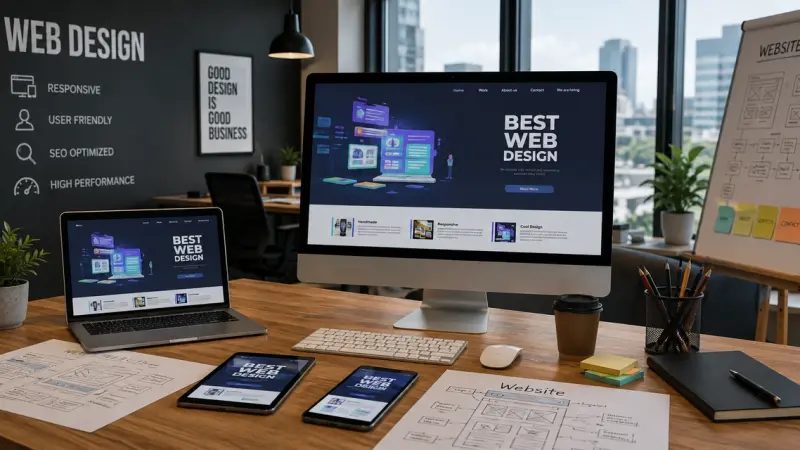
The Future of Web Design: Creating Digital Experiences That Turn Visitors Into Customers
 By Origin Websolutions
- Website Management
- Apr 20, 2026
- 8 minutes read
- 231 Views
Discover how the future of web design is transforming websites into faster, smarter, user-focused digital experiences that build trust, engage visitors, and drive business conversions.
“ The future of web design is not just about how a website looks, but how effectively it helps people find, understand, and act ”
The future of web design is no longer about simply creating attractive pages. Modern websites need to do much more: communicate a brand's value, guide visitors toward action, load efficiently, work across devices, and create an experience that feels natural and trustworthy.
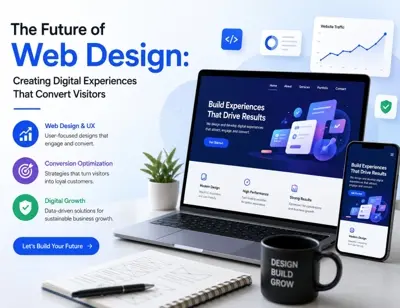
Create Digital Experiences & Convert More Visitors
Transform your website with modern design, seamless user experiences, and conversion-focused strategies that attract visitors, build trust, and turn more traffic into customers.
- Web Design & UX
- Conversion Optimization
- Digital Growth
For a digital web agency, this means combining creative design, technology, user experience, SEO, accessibility, and conversion strategy. Businesses that treat their website as an important part of their customer journey can create stronger digital experiences and stand out from the crowd.
As online competition continues to grow, a visually impressive website alone is not enough. The real goal is to create a website that helps visitors quickly understand a business and confidently take the next step.
Why Web Design Is Changing
Website visitors have higher expectations than ever. People expect pages to load quickly, navigation to be simple, content to be easy to understand, and websites to work smoothly on smartphones, tablets, and desktops.
At the same time, businesses are competing for attention across search engines, social media, advertising, and other digital channels.
This has changed the role of web design. A modern website is not simply an online brochure. It can function as a sales tool, communication platform, brand experience, and customer service channel.
The future of web design will therefore focus increasingly on how effectively a website helps users accomplish their goals.
Design With the Customer in Mind
One of the most important principles of modern web design is putting the user first.
Before designing a page, businesses should understand who their visitors are, what problems they are trying to solve, and what information they need before making a decision.
A website for a professional service company, for example, should make it easy for visitors to understand the company's expertise, services, credibility, and contact options.
Customer-focused design removes unnecessary complexity and creates a smoother journey from the first visit to conversion.
Create Experiences That Convert
A website can receive thousands of visitors and still generate disappointing results if those visitors do not know what to do next.
Conversion-focused design uses clear calls to action, logical page structures, compelling content, trust signals, and intuitive navigation to guide visitors.
A call-to-action might encourage users to:
- Request a consultation
- Get a quotation
- Contact the business
- Start a project
- Download a resource
- Make a purchase
- Subscribe to updates
The goal is not to pressure visitors. It is to make the next step clear and convenient.
Speed Will Remain Essential
Website performance is a major part of the user experience. Visitors can become frustrated when pages take too long to load, especially on mobile connections.
Digital web agencies should consider image optimization, efficient code, caching, content delivery, appropriate hosting, and careful use of third-party scripts when improving website performance.
A fast website can create a more comfortable browsing experience while supporting broader SEO and conversion goals.
Performance should be considered from the beginning of a project rather than treated as something to fix after the website is launched.
Mobile-First Experiences
Smartphones are an important part of how people discover businesses, research products, and interact with websites.
A modern website therefore needs to work naturally on smaller screens. Buttons should be easy to tap, text should remain readable, forms should be simple, and important information should not be hidden behind unnecessary interactions.
Mobile-first design does not mean creating a smaller desktop website. It means considering the mobile experience as a fundamental part of the design process.
Personalization and Smarter Experiences
Technology is making it possible for websites to provide more relevant experiences. Businesses can use customer data, analytics, and carefully implemented automation to understand visitor behavior and improve interactions.
Personalization might include showing relevant recommendations, tailoring content to different audiences, or creating smoother returning-user experiences.
However, personalization should always respect user privacy and provide genuine value. Technology should make the experience more useful rather than more complicated.
AI and the Future of Web Design
Artificial intelligence is becoming increasingly useful throughout the digital workflow. Designers and developers can use AI-assisted tools for brainstorming, content planning, prototyping, testing, research, and repetitive development tasks.
However, AI does not replace the need for human creativity and strategic thinking.
A successful website still needs a clear brand identity, authentic messaging, accurate information, and an understanding of real customer needs. The strongest approach is to use technology to improve efficiency while keeping human judgment at the center of the experience.
Accessibility Will Become More Important
An effective website should be usable by as many people as reasonably possible. Accessibility considerations can include readable text, sufficient contrast, keyboard navigation, meaningful labels, descriptive alternative text, and logical page structures.
Accessibility is not simply a technical responsibility. It is part of creating a better experience for users.
Digital agencies that consider accessibility from the beginning can create websites that are more inclusive and easier to navigate.
SEO and Web Design Must Work Together
Design and SEO should not be treated as separate activities.
A beautiful website will have limited business value if potential customers cannot find it. Similarly, a highly optimized website can struggle if visitors encounter confusing navigation or poor design.
A strong digital strategy combines:
- Technical SEO
- Content strategy
- User experience
- Website performance
- Internal linking
- Mobile usability
- Conversion optimization
- Clear information architecture
When these elements work together, the website can attract relevant visitors and provide them with a clear path toward conversion.
Use Data to Improve the Experience
The first version of a website should not necessarily be the final version.
Analytics can reveal which pages attract visitors, where users leave, which calls to action receive attention, and which content generates engagement.
Digital agencies can use these insights to identify opportunities for improvement. A landing page with a high number of visitors but few inquiries, for example, may need clearer messaging or a more visible call to action.
Data-driven improvement allows businesses to make decisions based on actual user behavior rather than assumptions.
Build for Long-Term Growth
The best websites are designed with the future in mind. Businesses grow, services change, technologies evolve, and customer expectations shift.
A flexible website architecture makes it easier to add new pages, services, integrations, content, and functionality without rebuilding everything from scratch.
A digital web agency should therefore consider scalability during planning and development.
Standing Out From the Crowd
Standing out online does not necessarily require complicated animations or unusual layouts. In many cases, differentiation comes from clarity, usefulness, authenticity, and a strong understanding of the customer.
A website can stand out by clearly explaining what makes a business different, demonstrating expertise, presenting original content, using a consistent visual identity, and providing an excellent experience.
The most memorable digital experiences are often the ones that make visitors feel understood and confident.
Conclusion
The future of web design is focused on creating useful, fast, accessible, engaging, and conversion-focused digital experiences.
For businesses, a website should be more than a digital storefront. It should communicate value, build trust, support marketing efforts, and help turn interested visitors into customers.
For digital web agencies, this creates an opportunity to combine design, development, SEO, performance, analytics, and strategy into one complete solution.
Businesses that invest in customer-focused digital experiences can build stronger online identities and create meaningful advantages in an increasingly competitive marketplace.
FAQ – Future of Web Design
Find quick answers to common questions about modern web design, user experience, website performance, mobile-first design, AI, SEO, accessibility, and conversion-focused websites.
1. What is the future of web design?
The future of web design focuses on user experience, performance, accessibility, personalization, mobile usability, AI-assisted workflows, and conversion-focused digital experiences.
2. Why is user experience important in web design?
Good user experience helps visitors find information quickly, navigate easily, understand a business, and take desired actions such as contacting the company or making a purchase.
3. How does web design help increase conversions?
Strategic layouts, clear messaging, strong calls to action, trust signals, simple navigation, and optimized landing pages can help guide visitors toward meaningful actions.
4. Why is website speed important?
Fast-loading websites provide a better browsing experience and can support engagement, search visibility, and conversions.
5. What is mobile-first web design?
Mobile-first design starts by considering the needs of smartphone users before expanding the experience to larger screens.
6. Will AI replace web designers?
AI can assist with many repetitive and creative tasks, but human designers remain important for strategy, creativity, brand understanding, user research, and decision-making.
7. How are SEO and web design connected?
SEO helps users discover a website, while good web design helps those visitors navigate and engage with it. Combining both creates a stronger overall digital experience.
8. Why is accessibility important for websites?
Accessibility helps make websites easier to use for people with different abilities and can create a more inclusive experience for a wider audience.
9. How can analytics improve website design?
Analytics can show how visitors interact with a website, helping businesses identify high-performing pages, user drop-off points, and opportunities for improvement.
10. How can a digital web agency improve a business website?
A digital web agency can combine web design, development, SEO, performance optimization, content strategy, analytics, and conversion optimization to create a website designed for sustainable online growth.
Origin Websolutions
Origin Websolutions is a team of web development and digital marketing professionals sharing practical insights on SEO, digital marketing, website development, content strategy, and online business growth. The team simplifies complex digital topics and provides useful tips, trends, and strategies to help businesses strengthen their online presence and grow.