
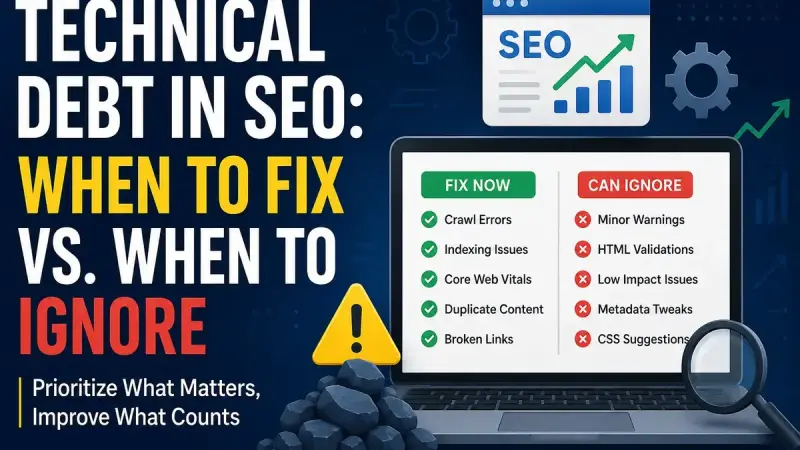
Technical Debt in SEO: When to Fix Issues and When to Ignore Them for Better Search Performance
 By Origin Websolutions
- Content Marketing
- Apr 20, 2026
- 2 minutes read
- 1,510 Views
Every SEO audit reveals hundreds or even thousands of technical issues, but not every problem needs immediate attention. Learn how to prioritize technical SEO debt, focus on high-impact fixes, and avoid wasting time on low-value recommendations that don't improve rankings.
“ Technical Debt in SEO: Knowing What to Fix and What to Ignore ”
Speed Optimized
Technical SEO audits often generate long lists of warnings, errors, and recommendations. While these reports can be useful, trying to fix every issue can consume valuable resources without delivering meaningful ranking improvements.
Prioritize High-Impact SEO Fixes
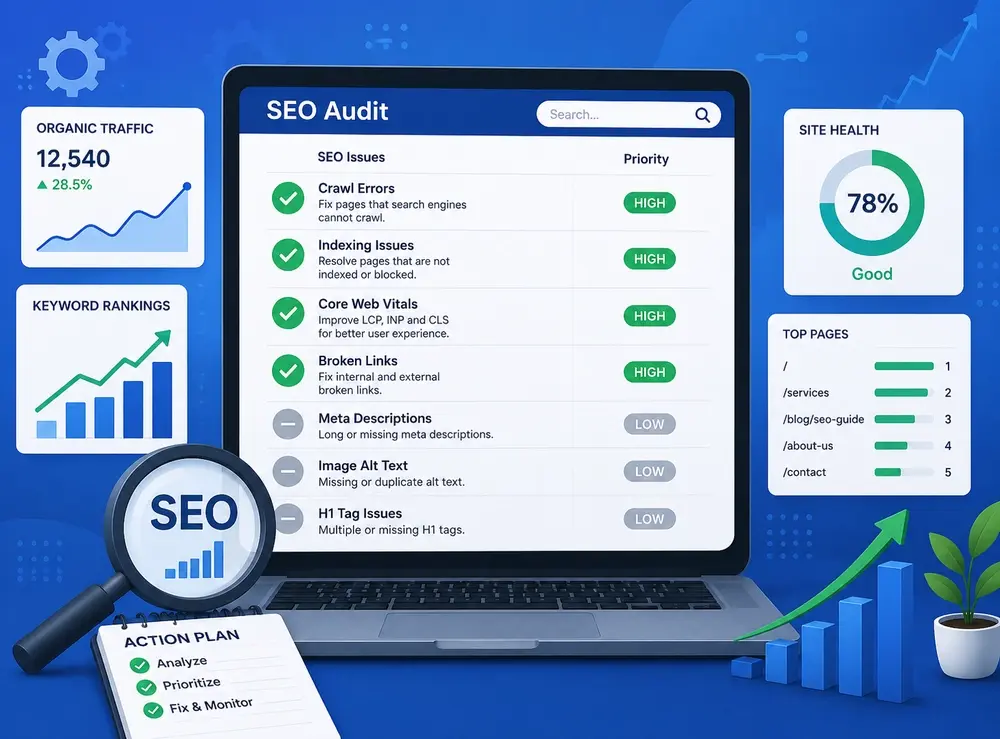
Not every SEO issue affects your rankings. Focus on fixing crawl errors, indexing problems, broken links, and Core Web Vitals first to maximize search visibility and make the best use of your development resources.
- Focus on crawlability and indexing issues first.
- Fix Core Web Vitals to improve user experience.
- Prioritize tasks based on SEO impact, not the number of warnings.
SEO professionals should instead focus on identifying technical debt that directly impacts search engine crawling, indexing, user experience, and organic visibility. Critical issues such as broken internal links, incorrect canonical tags, crawl errors, Core Web Vitals failures, duplicate content, and indexing problems deserve immediate attention because they can significantly affect search performance.
On the other hand, many audit tools flag minor issues that have little or no measurable SEO impact. Examples include unnecessary HTML warnings, excessive CSS recommendations, or low-priority metadata suggestions that don't influence rankings. Spending time on these fixes may increase technical perfection but often produces little business value.
A practical SEO strategy is to prioritize issues based on their potential impact, implementation effort, and business goals. Teams should classify problems into high, medium, and low priority categories, ensuring that development resources are allocated where they generate the greatest return.
High-priority issues generally include crawlability, indexability, structured data errors, page speed bottlenecks, and security problems. Medium-priority tasks may involve image optimization, internal linking improvements, and metadata enhancements. Low-priority items can often be postponed until higher-value work has been completed.
Regular SEO audits remain essential, but success depends on prioritization rather than perfection. By focusing on technical improvements that genuinely affect search visibility and user experience, businesses can reduce technical debt while maximizing SEO performance and long-term organic growth.
Origin Websolutions
Origin Websolutions is a team of web development and digital marketing professionals sharing practical insights on SEO, digital marketing, website development, content strategy, and online business growth. The team simplifies complex digital topics and provides useful tips, trends, and strategies to help businesses strengthen their online presence and grow.