
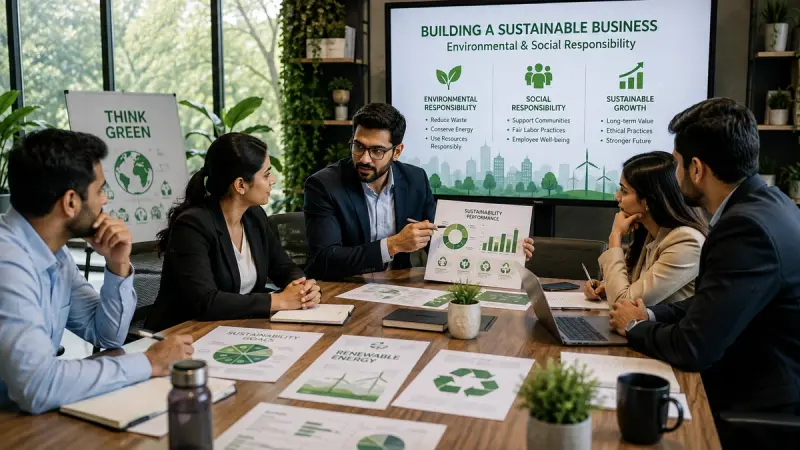
Building a Sustainable Business: Responsibility, Growth and Long-Term Impact
 By Origin Websolutions
- Business Consulting
- Apr 20, 2026
- 6 minutes read
- 1,647 Views
Discover how environmental and social responsibility can help businesses reduce waste, strengthen their brand, support employees and communities, and build sustainable long-term growth.
“ Responsible business is not just about doing less harm; it is about creating lasting value for people, communities, and the environment ”
In today's competitive marketplace, businesses are increasingly expected to do more than generate revenue. Customers, employees, investors, and communities want organizations to operate responsibly and contribute positively to society. This growing focus has made business sustainability, environmental responsibility, and social responsibility important parts of modern business strategy.
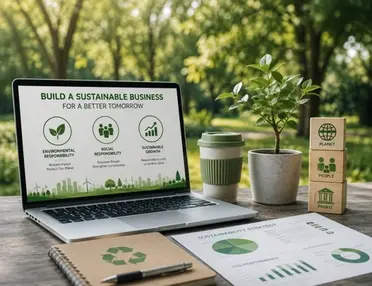
Build a Sustainable Business for Long-Term Growth
Create a responsible and resilient business by combining sustainable practices, environmental awareness, social responsibility, and smart strategies that deliver lasting value.
- Sustainable Growth
- Environmental Responsibility
- Social Impact
Building a sustainable business does not mean sacrificing profitability. Instead, it means finding practical ways to balance financial performance with environmental protection, ethical operations, employee well-being, and community impact. Companies that successfully integrate these principles into their strategies can strengthen their reputation, reduce risks, improve efficiency, and create lasting value.
What Is a Sustainable Business?
A sustainable business is an organization that considers the long-term impact of its decisions on people, the environment, and the economy. Rather than focusing only on short-term profits, sustainable businesses look at how their products, services, operations, and relationships affect the wider world.
Sustainability can involve many areas, including:
- Reducing waste and energy consumption
- Using resources responsibly
- Supporting employees and communities
- Maintaining ethical supply chains
- Developing sustainable products
- Reducing unnecessary environmental impact
- Promoting diversity and inclusion
- Maintaining transparent business practices
The goal is to create a business model that can remain successful while contributing positively to society.
Why Sustainability Matters for Modern Businesses
Sustainability has become an important consideration for customers and business stakeholders. People increasingly want to understand how products are made, where materials come from, and how companies treat employees and communities.
A responsible approach can help businesses build stronger relationships with customers. It can also differentiate a company from competitors offering similar products or services.
Sustainability can provide practical business benefits as well. Energy efficiency may reduce operating costs, waste reduction can improve resource management, and responsible supply-chain practices can reduce operational and reputational risks.
Reduce Environmental Impact
One of the most visible aspects of sustainable business is environmental responsibility. Companies can examine their operations and identify areas where they can reduce unnecessary resource consumption.
Simple improvements can include reducing paper use, improving energy efficiency, using energy-efficient equipment, minimizing packaging, recycling materials, and reducing unnecessary travel.
Businesses with larger operations can explore renewable energy, sustainable transportation, responsible sourcing, and more efficient production systems.
The important point is to focus on realistic improvements that can be measured and maintained over time.
Build a Responsible Supply Chain
A company's environmental and social impact does not stop at its own office or production facility. Suppliers and business partners can also influence sustainability.
Businesses should consider where materials come from, how products are manufactured, and whether suppliers follow responsible labor and environmental practices.
Building relationships with responsible suppliers can improve transparency and help businesses create a more ethical supply chain.
Companies should also avoid making sustainability claims that cannot be supported by evidence. Transparency builds greater trust than exaggerated promises.
Support Employees and Workplace Well-Being
Social responsibility starts within the organization. Employees are an important part of every business, and creating a healthy and respectful workplace can contribute to productivity, engagement, and retention.
Businesses can support employees through fair workplace policies, professional development opportunities, reasonable working conditions, clear communication, and opportunities for career growth.
A company that values its employees is more likely to create a strong workplace culture where people feel respected and motivated to contribute.
Contribute to Local Communities
Businesses are also part of the communities where they operate. Supporting local communities can take many forms, depending on the company's resources and goals.
Organizations may support local education programs, community projects, charitable initiatives, environmental activities, or small-business development.
Even smaller businesses can make a difference through volunteering, partnerships, donations, or responsible local purchasing.
Community involvement can strengthen relationships while creating positive social impact.
Develop Sustainable Products and Services
Sustainability can also become a source of innovation. Businesses can look for ways to create products and services that solve customer problems while using resources more responsibly.
For example, companies might reduce packaging, develop reusable products, improve product durability, or provide digital alternatives to resource-intensive processes.
Sustainable innovation should begin with genuine customer needs rather than simply following a trend. When sustainability improves both customer value and business performance, it becomes easier to maintain over the long term.
Make Sustainability Part of Business Strategy
Sustainability works best when it is integrated into the overall business strategy rather than treated as a separate marketing activity.
Leaders can establish measurable objectives related to energy use, waste, employee development, community involvement, sourcing, or operational efficiency.
Regularly measuring progress makes it easier to identify what is working and where improvements are needed.
For example, a business might set a goal to reduce office energy consumption over a specific period and then track monthly usage. Clear measurements turn broad sustainability goals into practical business actions.
Communicate Honestly
Effective communication is essential for building trust. Businesses should explain their sustainability efforts clearly and avoid making claims that could mislead customers.
Instead of saying a company is completely sustainable, for example, it may be more credible to explain specific actions already taken and the goals being pursued.
Sharing measurable progress, challenges, and future objectives can make sustainability communication more authentic.
Customers generally respond better to genuine efforts than to marketing messages that appear exaggerated.
Sustainability Can Strengthen Brand Reputation
A strong commitment to environmental and social responsibility can become an important part of a company's brand identity.
Businesses that consistently demonstrate responsible behavior can develop stronger relationships with customers, employees, suppliers, and communities. This can help create trust and distinguish the company from competitors.
However, reputation is built through actions. A sustainability message will have little value if the company's actual practices do not support it.
Consistency between what a business says and what it does is essential.
Prepare for the Future
Sustainable businesses are often better positioned to adapt to changing expectations, regulations, technologies, and market conditions.
By using resources efficiently, developing responsible processes, listening to stakeholders, and investing in innovation, companies can become more resilient.
Sustainability should therefore not be viewed simply as a social obligation. It can also be a strategic approach to preparing a business for long-term challenges and opportunities.
Conclusion
Building a sustainable business requires a balance between profitability, environmental responsibility, and positive social impact. Companies can begin by reducing waste, improving resource efficiency, supporting employees, building responsible supply chains, contributing to communities, and developing products that create long-term value.
Sustainability does not require every business to transform overnight. Meaningful progress can come from consistent, measurable improvements made over time.
In a crowded marketplace, responsible business practices can help organizations stand out for the right reasons. Businesses that combine strong financial performance with environmental awareness, ethical practices, and social responsibility can build deeper trust and create a more sustainable path toward long-term success.
Origin Websolutions
Origin Websolutions is a team of web development and digital marketing professionals sharing practical insights on SEO, digital marketing, website development, content strategy, and online business growth. The team simplifies complex digital topics and provides useful tips, trends, and strategies to help businesses strengthen their online presence and grow.